Words by Nick Walker
The centre of any city is its jewel in the crown. A place where locals come to work and live and socialise. Where tourists venture to experience the best of what a place has to offer, and get a sense of what it is about.
But does New Plymouth’s CBD reflect the vibe and vitality the region offers? It seems like a perfect storm has been quietly brewing in downtown New Plymouth over the last few years, where businesses have copped wave after wave of knocks.
Reduced foot traffic was prevalent – even necessary – in the Covid pandemic. The shift to working from home saw some people continue their ‘new normal’ and no longer come into town every day anymore.
The relentless growth of online shopping has brought increased competition, while the popularity of the Waiwhakaiho retail centre with its free parking continues to draw shoppers away from the CBD.
A cost of living crisis peaked in 2022, around the same time as headlines about rough sleeping and vacant retail space were common. Just as signs of a recovery were emerging, this year’s fuel crisis saw prices skyrocketing again.
Many of these issues are not unique to New Plymouth, but regardless, there’s widespread agreement that the CBD could do with having some life breathed back into it.
“There’s been underinvestment in the CBD over many years…tired is the word for it,” says Kings & Queens co-owner, and former Taranaki Chamber of Commerce chair Daniel Fleming.
Change, change, change
To make an omelet, you need to break a few eggs.
Between the debris of demolished buildings and hi-vis traffic cones, you can now spy a new vision starting to take shape. Vistas you’ve never seen before as increased light and viewshafts come into play. Look past the array of orange traffic cones and you’ll find patterns blasted into the concrete, and new traffic layouts to calm the pace of vehicles.
Vibrant street art and sculpture add to an intriguing mix of historic, freshly painted buildings and revamped retail spaces.
New native plantings are being trialled at the western end of Devon Street, with a vision to replace the ageing Italian alder trees right up the street.
The changes may seem like a happy coincidence but it is actually all part of the plan.
In the 2024-2034 Long Term Plan, the New Plymouth District Council allocated $10.4 million for design and delivery of strategy projects over the next decade, with an additional $2.2 million to accelerate the demolition and daylighting of the Huatoki River.
Now, that strategy is starting to come to life.
It’s about more than just giving the CBD a facelift. The challenge NPDC has effectively given itself is to rethink the central city beyond just a place to shop.
“City centres are changing at a fast pace,” says NPDC Manager of Strategic Planning Renee Davies. “People are engaging with cities in different ways, and one of the critical things for us is how we respond to how it’s changing and provide the right investment as a catalyst for creating a CBD that meets those needs.”
Infometrics data shows consumer spending in New Plymouth growing relatively steadily over the last five years. But beneath the surface, there are still some concerns.
A 2024 NPDC report said the CBD had lost around 250 retail jobs since the turn of the century, most notably due to retail activity moving towards the city fringe (i.e. The Valley Shopping Centre), and online. It’s not so much that people are spending less, it’s that the CBD is capturing less of the pie.
At the heart of the strategy are five goals: to restore the Huatoki awa (river) and reconnect it with the city; to strengthen the connection between the CBD and the coast; to create greener links through the city, particularly from Pukekura Park and Pūkākā/Marsland Hill; to increase living opportunities in the city centre and to enhance the everyday experience in the CBD.
“We know people come for the coastal walkway, the parks, the Art Gallery,” says NPDC City Centre Strategy Project Manager Gaye Batty.
“A big part of the strategy is linking those places to each other and to the CBD, so it brings people who are here for one activity into another, or into the city centre where they can discover other things to see and do.”
The strategy also formalises a Māori Design Principles Outline Approach, which provides a framework for how Māori design is embedded within projects. The idea is to ensure development has a consistent, distinctly New Plymouth flavour that honours local history and tells the story of the region.
“It moves beyond simply including Māori elements in a project,” says Ngāti Te Whiti spokesperson Julie Healey. “It creates an opportunity for Māori thinking, identity and connection to place to influence how the city develops. It’s about bringing our different strengths together to weave the future of Ngāmotu.”
The opportunity
Despite the challenges of the past few years, there’s plenty of optimism around the CBD and its potential.
Belhams Interiors moved from Fitzroy to Liardet Street three years ago, and owner Belinda Brown noticed how it immediately raised their profile.
“We get so much more foot traffic,” she says. “People drive past and see us. If they see an empty car park out the front they’ll grab it, or they’ll proactively come back. We didn’t have that before.”
Done By Nine co-founder Jordan McFadyen moved his digital marketing businesses a literal stone’s throw last year, from the Quarter Bank container mall to Devon Street West. It begs the question, for a business that largely runs online, why bother with such a short move?
“The location is a billboard in itself,” he says. “It gives us a presence and means we’re part of the vibe so much more.”
The city may not have all the ingredients for a successful recipe, but it does have one of the important ones: people.
“People are already in the CBD, and if you can make it full of life and give them a good experience it draws them back, and they encourage other people to come,” explains Daniel Fleming. “That’s how it grows.”
Time for action
The Centre City Strategy sits within NPDC’s 10 year plan, with an ultimate vision for 2050. Individual projects need to be voted on and approved in order to go ahead.
Gaye Batty says the strategy has moved from planning and engagement into a delivery phase. In the last 18 months, 22 Italian alder trees have been removed from Devon Street and replaced with natives.
A makeover of the New Plymouth Cenotaph and surrounding road and carparks was completed in July, making it a safer, better place to visit.
The considerable upgrade of Queen Street is nearing completion (at the time of writing), creating a shared space for pedestrians and vehicles, and seating and outdoor dining between the Len Lye Centre and the West End Precinct.
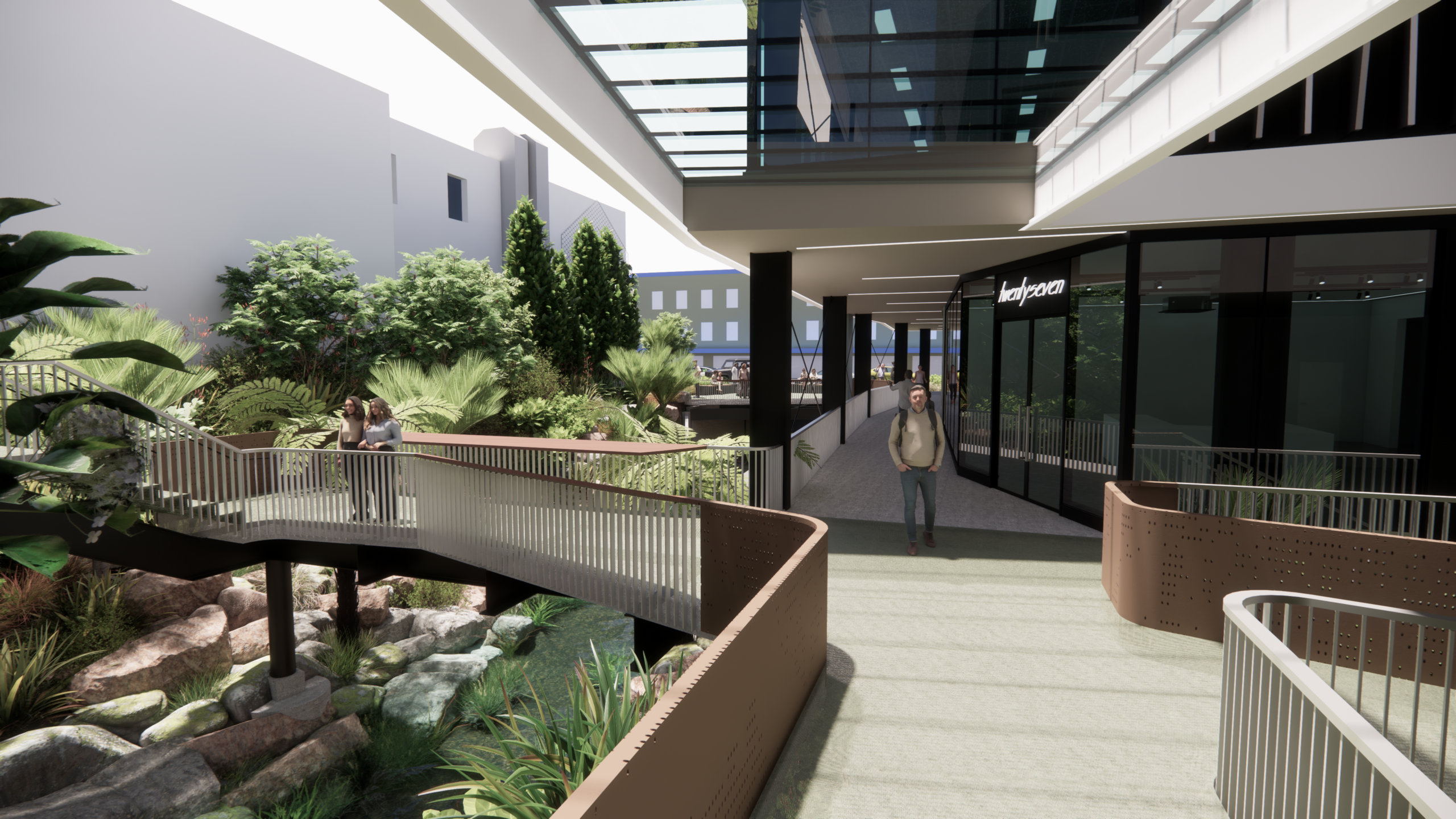
Restoration of the Huatoki River and surrounding areas has been brought forward.
This will be the city’s first ever public-private partnership with K.D. Holdings, which owns properties either side of the council-owned (and recently demolished) Metro Plaza. It includes uncovering the river, constructing new buildings and installing a public walkway and foot bridge between Devon Street and Brougham Street.
It’s perhaps the biggest project on the council’s current agenda, both physically and culturally; Julie Healey says the Huatoki is a significant part of the cultural landscape within the CBD.
“Our tupuna (ancestors) lived, travelled and gathered kai (food) along this landscape, and the awa (river) was part of everyday life. To see the Huatoki reopened is meaningful because it brings our relationship back into the landscape, and reconnects people with the history and identity of Ngāmotu.”
“The big benefit for ratepayers is it’s getting done now and not in five years time. That saves millions of dollars,” says K.D. Holdings’ Kevin Doody. “It’ll revitalise the centre of the city with new construction and having the river opened up. It’ll be unique for the city.”
There are other potential changes in the works too – for example, NPDC recently sought feedback on a proposal to allow dogs on leads in parts of the city.
The end game
Ultimately, the hope is initiatives will kick start activity in the city, and it’ll snowball from there.
Renee Davies from NPDC refers to works as “catalytic spending.”
“For example, if we create mutually beneficial outcomes from planning alongside property owners, landlords then have greater ability to get tenants, and those tenants’ businesses have a better chance of succeeding. It can bring hundreds more people to the city to work, eat, get haircuts and so on.”
To that end, Kevin Doody says contributing to the reinvigoration of the city is “hugely satisfying.” He’d encourage other city land owners to consider partnering with the council to upgrade their properties.
“It’s looking at it to see how we can improve the look and feel of this place beyond just a lick of paint, and without looking at the dollar return – that’s what it needs,” he says.
Julie Healey sees the opportunity to create a city that’s genuinely connected to the people.
“A city should tell the story of the place; its whenua (land), its awa (rivers), its people and its history. Bringing the cultural identity of Ngāmotu into the heart of the city gives the whole community a stronger sense of place and belonging.”
There’s a sense that every business in the CBD can help to get that snowball rolling, and council projects alone shouldn’t be seen as a silver bullet.
“We’ve painted our building white to brighten it up and have a cool blue light at night,” says Jordan McFadyen. “There are people in the bars nearby and walking past at night – it adds something to the area and it’s another little way we can get their attention.”
Similarly, Belinda Brown says they regularly update their website, change window displays and the interior of the retail shop to encourage customers to come in.
“These things make people want to see what’s changed or what’s new in person, and that’s the kind of engagement we need to have with people in the city.”
What’s next ?
The Council will vote on how to continue enacting the Centre City Strategy as part of its Long Term Plan in early-mid 2027.
It’s too early to say what, if any, other initiatives will emerge from that. It’s possible that a focus on minimising rates rises will mean no new spending is allocated to CBD revitalisation projects, at least for the moment. The public will be able to make submissions on draft decisions before they’re confirmed.
Meanwhile the Huatoki restoration project will ramp up from November, with the river to be uncovered between Courtenay Street and Devon Street for the first time in around a century. Construction of the new neighbouring buildings will follow, with a goal of being finished in mid-2028.
For Julie Healey, the Central City Strategy whakatauakī (proverb) summarises the whole point.
“Whiria te tangata kia Kotahi ai ōna mana ōna whenua: With land and people together, our city centre thrives for all.”