Words by Irena Brooks & Hannah Mumby
It has been almost a year since a coward punch outside the Tukapa Rugby Club killed New Plymouth man, Daniel Nganeko (37). The incident devastated his parents, Christine and TeUraura Nganeko, and his twin brother Cameron.
What began as a hellish journey through the pain of losing a child has been followed by an interminable walk with grief and a relentless search for answers.
His killer will be eligible for parole before the end of this year.
For Daniel’s family and friends, their life sentence is just beginning.
“Before Daniel became another statistic, he had a life worth remembering,” says his Dad. ‘He was a son, a twin brother, a friend, a mentor and one of the most genuinely decent people you could hope to meet.”
Raised in a close-knit family surrounded by whānau and lifelong friends, Daniel grew into a young man defined by respect, humility, integrity and kindness. The family spent summers camping at Urenui Beach, and both boys qualified as lifeguards at East End, learning the values of service, responsibility and community.
Gifted in art, design and technology, Daniel excelled academically and creatively, becoming the first member of the Nganeko family to graduate from university.
He completed a Bachelor of Art and Design in Visual Effects and 3D, a Diploma in Graphic Design and a Diploma in Architectural Technology, along with numerous other qualifications throughout his life.
His career later took him to Melbourne where he worked as a videographer, motion graphics designer and post-production specialist.
In late 2024 he returned home to New Plymouth to be closer to family and friends. Never content to stop learning, he completed further training in data analytics and had recently decided to retrain as a secondary school teacher. He wanted to work with young people and make a difference in their lives.
He was only 37 years old when his life was taken, but the hundreds of people who packed his funeral showed just how many lives he had touched.
The Assault
On Saturday 26 July 2025, Daniel attended the Tukapa Rugby Club senior prize-giving. He was there to support the club and catch up with friends.
“He was gentle,” says his mother Christine. “The kind of man who made people feel safe. Not because he was loud or intimidating, but because he was respectful, steady and kind.”
By every account, Daniel was having a great night.
Also at the club that evening was Daytona Thompson. Witnesses later described Thompson as intoxicated and attempting to provoke confrontations. A club official cautioned him about his behaviour.
Late in the evening, internal CCTV footage captured an interaction that would later become significant. Thompson was speaking with another club member on the dance floor when Daniel approached and appeared to place an arm around him in a friendly and conciliatory manner. CCTV shows Daniel patting Thompson on the shoulder. He then appears startled by something Thompson said or did and can be seen stepping backwards away from him. The other club member immediately intervened and pushed Thompson away.
Daniel then left the club to go into town with friends and they were outside sorting rides. Seven minutes had passed since the confrontation inside the club.
Thompson comes out, sees Daniel with one of his friends, and makes the decision to cross the road to where they were standing. A witness described him as agitated. He briefly stoops down to talk to a couple of Daniel’s friends in a car. Meanwhile Daniel’s other friend leaves and he is standing alone on the footpath. Without warning, Thompson raises up from his position by the car and delivers a powerful punch to Daniel’s jaw. Daniel never saw it coming, never raised his hands, never had a chance to defend himself. The force of the blow knocked him off his feet and he fell backwards onto the concrete footpath.
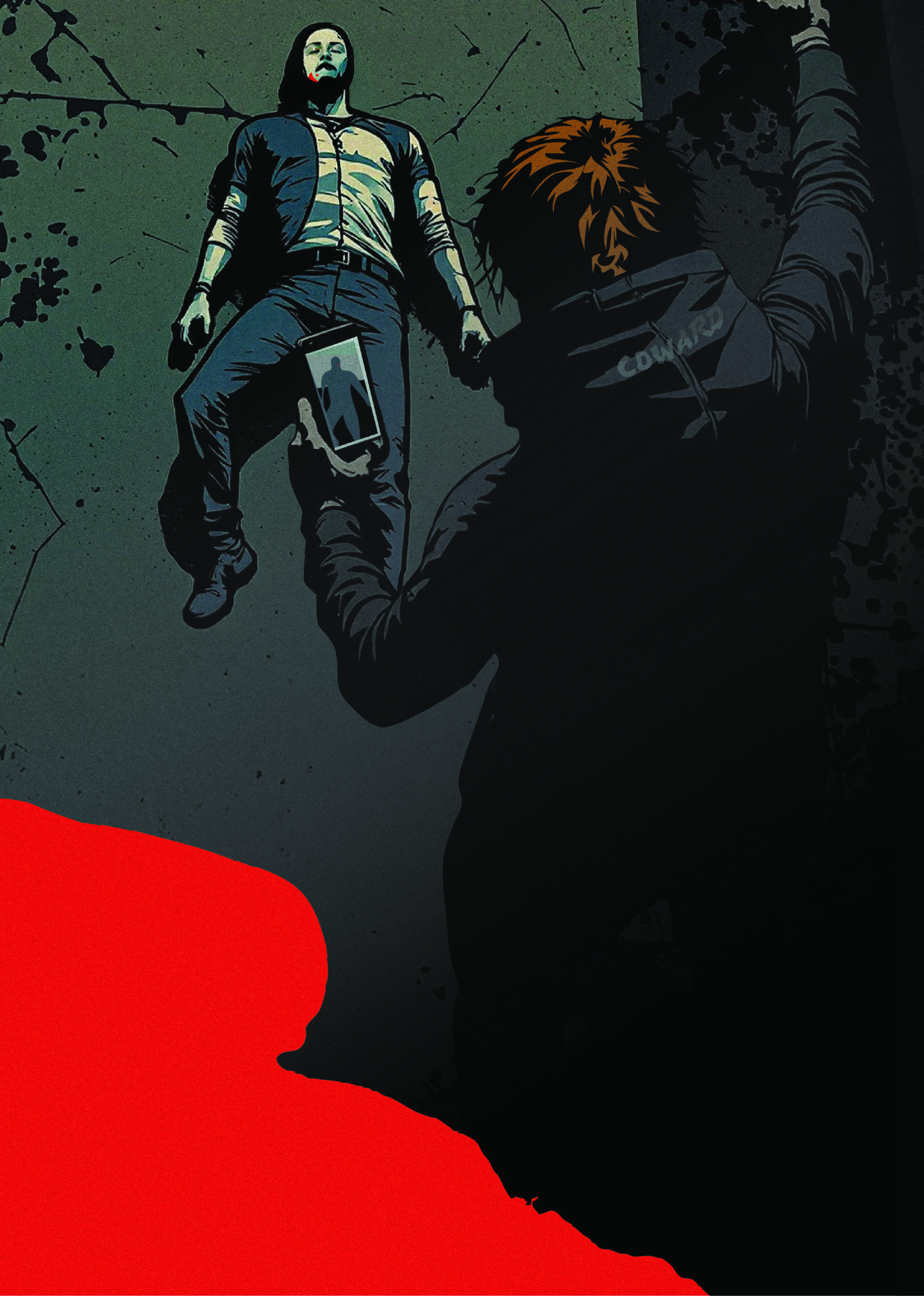
Then, Thompson did something that reveals his mindset far more clearly than any remorse statement ever could. He pulled out his phone, stood over Daniel’s prone body and filmed him, chanting “Come around here, come around here n**, I am not a kidder.” When a bystander asks what happened he boasts, “I knocked him the f out, e hoa.”
The whole incident is captured on CCTV, with the taunting found on Thompson’s cell phone.
The family view that racial slur and filming of Daniel while he lay dying as a deliberate humiliation and degradation of Daniel.
“In Māori terms, that was a profound takahi (stamping on) of Daniel’s mana,” explains TeUraura. “Apart from killing Daniel, as a Māori and as a father I cannot walk past that.”
Thompson then goes back inside the clubrooms to the men’s toilet and reappears a short time later, followed by his brother. He returns to the scene of the assault, his hoodie pulled over his head, and asks people trying to help Daniel “ What’s happened here?”
Witnesses identify him as Daniel’s assailant to club officials and Thompson runs off.
The Ambulance
At about 11.30pm TeUraura’s phone rang. It was Christine letting him know Daniel had been knocked out at Tukapa.
Initially neither parent understood how serious the situation was.
When TeUraura arrived, Police cars and ambulances already surrounded the scene. He climbed into the ambulance where Daniel was lying on a stretcher while paramedics worked frantically around him.
To a father, Daniel looked as though he was sleeping. To TeUraura, a former Detective who had attended countless serious assaults and sudden deaths, the scene told a different story. The senior paramedic looked towards him. “Dad, your son’s not good. His pupils are dilated five.”
TeUraura immediately understood what he was being told. Dilated pupils indicated catastrophic brain injury. Moments later he heard another instruction. “We need to intubate him. Prepare for intubation.” He knew exactly why — without intubation Daniel would die there and then.
“I knew then how serious it was,” he recalls. “My thoughts immediately went to Christine and Cameron.”
Daniel was flown to Auckland Hospital. His parents drove through the night to be with him.
As they stood beside his bed the senior registrar explained that Daniel had suffered catastrophic head trauma. She also spoke of a suspected carotid artery injury, internal fractures to his nose that may have resulted from the force of the punch, and possible lower brain stem injuries.
TeUraura and Christine, an experienced Registered Nurse. both understood the seriousness of what they were being told.
As they listened, they found themselves wondering what injury had rendered Daniel unconscious and left him fighting for his life. Those questions would have to wait. At that moment, their only concern was Daniel and the hope that somehow he would survive.
Throughout the night family members took turns sitting with Daniel in Critical Care, talking to him, holding his hands and willing him to come back to them.
A second MRI the following morning followed by various examinations confirmed that Daniel’s injuries were unsurvivable — Daniel was brain dead.
The family made the agonising decision to remove his life support at 10am the following morning. They wanted one final night with him.
Poroporoaki (Farewell)
TeUraura prepared his mihi, his karakia and in the early hours of the next morning, as he sat holding Daniel’s hand, he searched his mind for the right song. He knew many Māori waiata, but none felt right. Then something unexpected happened. As he looked at Daniel lying in the hospital bed, he stopped seeing the grown man. He saw the little boy he loved so much. The little boy who had become one half of a pair of twins.
“I wasn’t looking at a grown man anymore,” he recalls. “I was looking at our little boy.”
And then the song came to him. Over the Rainbow. Not as a farewell for a man, but as a lullaby for a little boy.
“It just felt right,” he says.
The following morning, friends and whānau gathered around Daniel’s bedside. TeUraura welcomed them with a mihi and then offered his karakia poroporoaki, his farewell prayer. Together they sang Over the Rainbow.
At 10am on 29 July 2025, surrounded by family, friends and love, they gently let him go.
The nurses removed the breathing tube that had kept Daniel alive for the previous three days. The family had been prepared for what was about to happen but there came a moment the family will never forget.
As Daniel’s body was deprived of oxygen his body began to convulse and spasm as the catastrophic injuries to his brain took their final toll. Instinctively, Christine took hold of his hands. She leaned over her son and spoke softly to him.
“You’re okay Daniel.”
“Settle down.”
“You’re okay Daniel.”
There are no words that adequately describe watching your child die, says TeUraura. “Watching your boy fade away. Watching his mother trying to comfort him one last time. You cannot unsee that. You cannot unhear that. That never leaves.”
At 10.10am the nurse gently confirmed that Daniel had gone.
The family sat with him for a while longer – nobody was ready to leave.
Before they said their final goodbye, hospital staff took impressions of Daniel’s hands and carefully cut locks of his hair for the family to keep. They also kept the printout recording his final heartbeats. Today those mementos sit beside Daniel’s ashes at home — the last physical reminders of a son they loved beyond words.
The first year without Daniel
“People often say that time heals. It doesn’t,” TeUraura says. “Time simply teaches you how to carry the grief. The pain remains, the empty chair is still there but Daniel was not, and never will be.”
Losing Daniel was the first tragedy. What happened afterwards became the second. The search for answers, accountability and justice would become a battle of its own.
Two days after Daniel was taken off life support, Police informed the family that Daytona Thompson would be charged with manslaughter. They were told it was a tragic situation for both families, that Daniel was just in the wrong place at the wrong time. They were told there was no intent to hurt Daniel, and therefore no evidence to support a murder charge.
As a former detective, TeUraura accepted that difficult decisions had to be made. What concerned him was how quickly those decisions appeared to have been reached.
“Police are the first and most powerful determiners of justice in New Zealand because they create the evidential record the entire justice system must operate within. Judges can only sentence on what is lawfully before them.
“If critical evidence is not gathered early, it does not exist later (as far as the courts are concerned). If aggravating features are not fully investigated, if recklessness is not fully developed, sentencing seriousness inevitably narrows.”
At a meeting with the Police and Crown Solicitor, TeUraura and Cameron both raised the issue. “How had key investigative conclusions been reached so early? Had all relevant witnesses been identified? Had all available evidence been gathered? Had every reasonable line of enquiry been explored? Was Thompson getting off too lightly with a manslaughter charge?
“As a former detective, and following my own review of the evidence, I believe there were multiple instances where Thompson effectively admitted intent,” says TeUraura. “My concern has never been simply the charge that was laid. It is whether all available evidence relevant to intent was fully identified, explored and presented.
“In my professional opinion there were investigative avenues that warranted closer examination. Instead, the investigation appears to have been effectively concluded once a manslaughter guilty plea was secured. I have seen nothing that satisfies me that all reasonable lines of inquiry were exhausted before that occurred.”
Over the months that followed, the family lodged Official Information Act requests, sought access to investigative material, made complaints to oversight agencies and attempted to understand how decisions had been made. The further they pushed, the more doors appeared to close.
“When a loved one is killed through violence, families enter the justice system believing they are the victims. But we are not even participants. You become an observer to the process that determines what your child’s life is worth.
“We are not treated as victims, we are just witnesses to our own catastrophe.”
Diluting the value of a life
At sentencing on the 7th October last year, Justice Paul Radich set a starting point of seven years for manslaughter, citing the considerable force Thompson used in the assault, the fact there was no provocation and that he had videoed his victim as aggravating factors.
He then gave Thompson discounts for his early guilty plea, the fact he had a young daughter, his relative youth and background, before sentencing him to four years two months jail and issuing him with a first strike warning.
Thompson’s first parole hearing is due towards the end of this year. For sentences longer than two years, fixed term offenders become eligible for parole after serving one-third of their sentence.
“Each discount applied in sentencing serves a legitimate function,” reasons TeUraura. “Guilty pleas acknowledge responsibility and save court time. Youth and background factors are intended to recognise the potential for rehabilitation. Remorse can demonstrate personal accountability.
“But when a life has been taken, the cumulative effect must surely preserve proportionality. Where death has occurred, the seriousness of the harm should anchor the sentence.”
In Daniel’s case, the evidence of what happened was overwhelming from the outset. There was CCTV footage, eyewitnesses, admissions.
“When guilt is already clearly etablished, the moral value of a guilty plea becomes limited,” says TeUraura.
“Yet the system still automatically rewards that plea with a discount of up to 25 percent.
The primary beneficiaries of discounts are the offender and the justice system itself, which saves time and $200,000 for every year an offender is kept out of jail.
“But the value placed on the life that was lost becomes progressively diluted.”
Why did Daniel die?
Still, one issue stood above all others — the question of how Daniel died.
Was it the punch that delivered Daniel’s death sentence— or was it the impact of the footpath?
TeUraura specifically asked that the suspected carotid artery injury be brought to the attention of the forensic pathologist and examined during the post-mortem process. The Detective (Officer in Charge of Body) attending the forensic postmortem assured him the information would be passed on.
Two days after the post-mortem examination was completed, the family were advised there were no carotid artery injuries and that Daniel’s death resulted from blunt force head injuries sustained when his head struck the pavement after he had been knocked unconscious.
At the time, TeUraura accepted that explanation.
What troubled him later was how difficult it became to obtain the information needed to understand how that conclusion had been reached. Repeated requests for copies of the pathology reports were declined. It was not until late November 2025, almost four months after Daniel’s death, that the family finally obtained a copy of the forensic pathology report.
TeUraura could not identify any documented examination of the suspected carotid artery injury discussed by treating clinicians, nor any explanation as to how that possibility had been examined and excluded.
That discovery raised further questions. If clinicians treating Daniel had identified a suspected carotid artery injury, where in the forensic process had that issue been examined? What findings had been made? How had those findings contributed to the final determination of the cause and mechanism of death?
“Those questions are not about proving a particular answer. They are about understanding how the answer was reached.”
Almost a year later, he is still seeking those answers through the coronial process.
Searching for answers
What began as a grieving family’s need to understand how their son died has evolved into a much broader examination of the institutions responsible for delivering justice.
TeUraura believes incentives built into the system over the past two decades have inadvertently disproportionately favoured offenders over victims.
“Prisons and trials are expensive. So are long sentences.
Every offender diverted from prison, every sentence reduced, every early release and every alternative pathway creates savings for the Crown. Over time, those savings amount to hundreds of millions of dollars per annum and billions over the past 20 years.
“At the same time, governments became increasingly concerned about Māori over-representation in prison. Māori make up around 17 percent of New Zealand’s population but 52% of the prison population.
“Reducing incarceration became both a fiscal objective and a social policy objective. Few would disagree that reducing offending and improving outcomes for Māori are worthwhile goals. The question,” says TeUraura, “is how those goals were pursued.”
Beginning with major sentencing reforms in 2002, and accelerating through subsequent justice-sector reforms, an extensive framework emerged around diversion, rehabilitation, reintegration and reducing reliance on imprisonment, he says.
“Police developed policies focused on responsiveness to Māori and reducing Māori involvement in the criminal justice system. Diversion programmes expanded, alternative resolutions increased and community-based interventions such as Te Pae Oranga emerged. Sentencing increasingly emphasised rehabilitation, personal circumstances and the least restrictive outcome appropriate in the circumstances.”
Viewed individually, many of these initiatives were well-intentioned. Viewed collectively, TeUraura believes they reveal a system increasingly designed to reduce imprisonment, particularly Māori imprisonment.
Daytona Thompson’s history provides a real-world example. In 2022, Thompson was charged with one count of Assault with Intent to Injure and two counts of Common Assault. Rather than proceeding directly to sentencing, he was referred to Te Pae Oranga.
After completing the programme, he appeared before the District Court and was granted a discharge without conviction. Legally, he was treated as having no conviction for those offences. Two years later, he delivered the punch that killed Daniel Nganeko. For TeUraura, that sequence of events raises difficult questions.
“Who measures the long-term outcomes of offenders diverted from the criminal justice system?” TeUraura asks. “Who measures the risks transferred back to victims and communities? Who is accountable when a programme regarded as a success is later followed by tragedy? And how many similar cases exist?
“The system became very good at counting offenders,” he says. “It became very good at counting Māori prosecution and incarceration rates. But when I started asking how many Māori victims of Māori violence were being saved from harm, nobody seemed to be counting.”
For TeUraura, the question is not whether some offenders can be successfully diverted from prison. The question is whether the system is equally willing to measure, acknowledge and learn from the occasions when those interventions fail.
Proposed new ‘coward punch’ legislation could introduce harsher offences, but until the Sentencing Act is amended too, sentences for coward punches will not change.
The last door
The family’s search for answers eventually led TeUraura to file a claim with the Waitangi Tribunal. The claim asks whether justice system settings designed to reduce incarceration have unintentionally weakened protections for victims, including Māori victims, and whether the risks associated with those policies have been adequately measured and understood.
But while the Tribunal may one day consider those wider questions, the family is still searching for answers much closer to home. Almost a year after Daniel’s death, a small number of fundamental questions remain unresolved.
What injury rendered Daniel unconscious? What role, if any, did the punch itself play in causing his death? Were all reasonable forensic possibilities examined and excluded? How were the final conclusions reached?
“These are not academic questions. They are questions every family should have the right to ask and deserves answers to,” says TeUraura.
Over the past year, he has knocked on many doors — The Police, the Ministry of Justice, the Independent Police Conduct Authority, the Ombudsman, other agencies involved in the process. Some questions have been answered but many have not.
Today, only one door remains. The Coroner’s door.
Unlike the criminal justice process, the coronial process is not concerned with securing convictions or determining guilt. Its purpose is to establish how and why a person died. That makes the coronial process critically important, because it may finally provide answers for the Nganeko family.
Police have confirmed there have been at least 34 fatal coward-punch deaths in New Zealand since 2007. Many more coward punch victims live with ongoing disabilities.
That is why the Nganeko family continue to ask questions.
And that is why, almost a year later, they are still searching for answers. •